
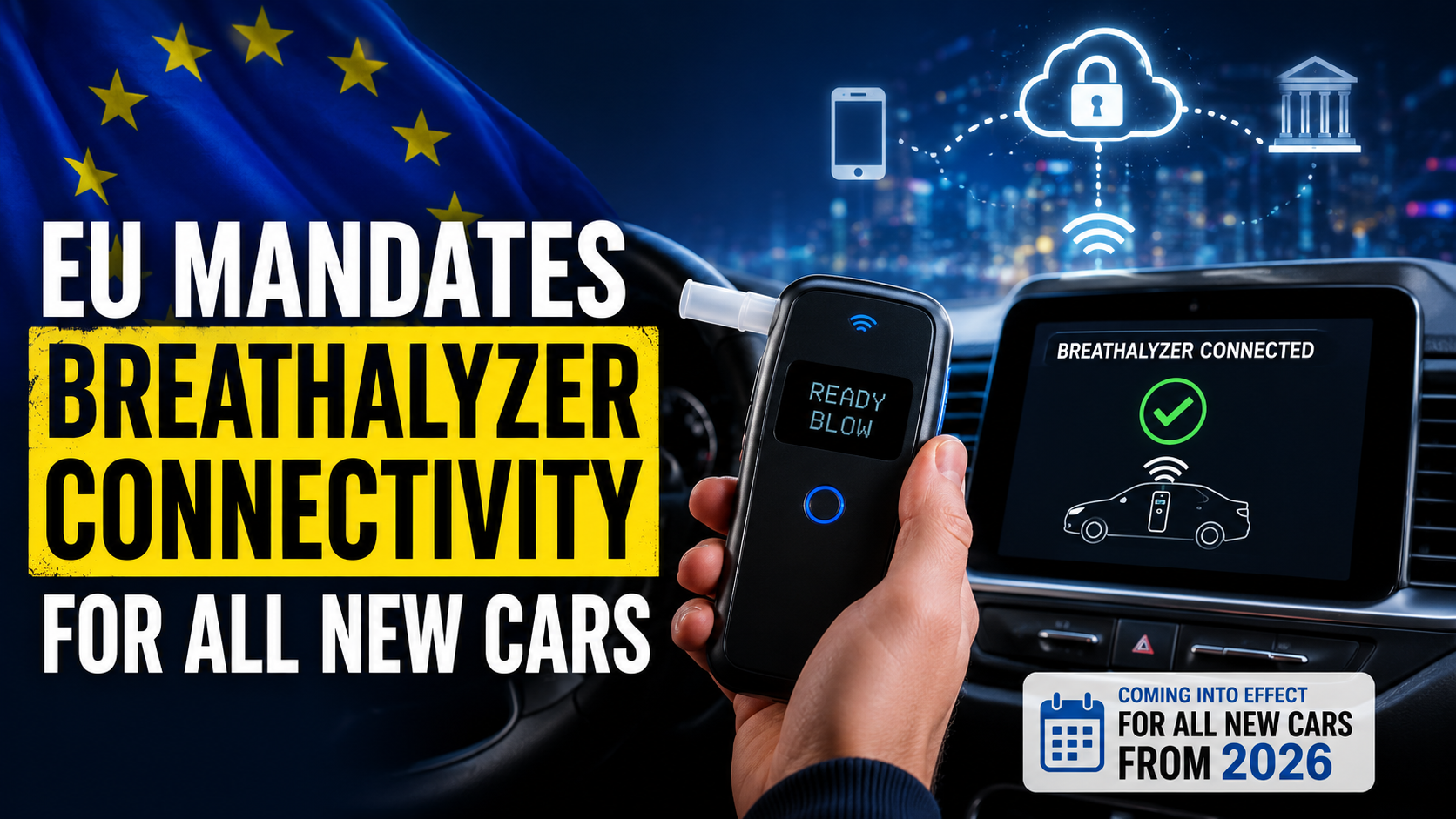
EU Mandates Breathalyzer Connectivity for All New Cars
Europe is about to mandate a new kind of safety feature for cars. Soon, every new vehicle sold in the European Union will need to be ready to connect to an alcohol interlock device, more commonly known as a breathalyzer. This isn’t about making breathalyzers standard equipment just yet, but about making sure the underlying technology is there.
The move is a critical part of the EU’s ambitious plan to eliminate all drunk-driving-related deaths and injuries by 2050. It’s a bold target, and this new requirement for vehicles signals a serious shift in how regulators approach road safety. It brings up significant questions about technology, privacy, and personal responsibility.
We’re going to look at what this mandate means for drivers, manufacturers, and the future of vehicle technology. This isn’t just another tech update; it’s a regulatory earthquake with far-reaching implications for how we think about cars and driver accountability.
EU Mandates Breathalyzer Readiness in All New Vehicles
The New EU Road Safety Measure
Starting July 2024, new car models introduced to the EU market must be equipped with an interface allowing for an alcohol interlock device to be fitted. By July 2026, all newly registered vehicles will need this capability. This isn’t just a suggestion; it’s a binding safety standard.
The mandate specifies that vehicles must be able to hook up to a breathalyzer. This means manufacturers need to integrate a standardized port or system into their cars’ electronics. It’s a preparatory step, laying the groundwork for potential future requirements where the devices themselves could become more widespread or even mandatory in certain situations.
This measure is part of a broader General Safety Regulation (GSR) update from the European Commission. The GSR also includes other advanced driver assistance systems (ADAS) like intelligent speed assistance and driver drowsiness monitoring, all aimed at reducing road fatalities and serious injuries.
Why This Matters
The EU’s goal is clear: zero drunk-driving deaths by 2050. That’s a noble, if incredibly challenging, objective. Alcohol-related crashes remain a significant cause of fatalities on European roads, and this mandate directly confronts that issue head-on with a technological solution.
For car manufacturers, this means another layer of complexity in design and production. They must ensure their vehicles comply, adding to development costs and potentially impacting timelines. This isn’t a feature that sells cars; it’s a regulatory hurdle they must clear.
Drivers might see this as an intrusion, a pre-emptive judgment, or a necessary evil. The presence of such an interface, even if unused, prompts questions about privacy and the increasing surveillance capabilities within our private vehicles. It pushes the boundaries of what is acceptable for public safety versus individual freedom.
The underlying technology involves more than just a simple plug. It requires secure integration with the vehicle’s ignition system, ensuring that if an interlock is present, the car won’t start without a clean breath sample. This level of system integration is complex and requires robust cybersecurity measures to prevent tampering.
How It Compares
Mandatory alcohol interlock readiness for all new vehicles is a significant departure from previous safety regulations. Most existing alcohol interlock programs are rehabilitative, applied to individuals with repeat drunk driving offenses. These programs require offenders to install a device in their personal vehicle as a condition of driving.
Compare this to other mandatory safety features like seatbelts, airbags, or Anti-lock Braking Systems (ABS). Those technologies protect occupants and help avoid accidents generally. This breathalyzer mandate targets specific driver behavior directly, creating a preventative barrier before an impaired driver can even start the engine.
The EU is taking a far more proactive stance than regions like the United States, where discussions around similar mandates have been met with stronger resistance. While the US has explored passive alcohol detection systems in vehicles, widespread legislative mandates like the EU’s have not materialized for all new cars.
This EU measure sets a global precedent. It signals a future where vehicle safety isn’t just about protecting you in a crash, but actively preventing risky behaviors from occurring at all. It blurs the line between a car and a personal responsibility enforcement device.
Key Takeaways
- New vehicle models in the EU must have alcohol interlock readiness by July 2024, with all new vehicles by July 2026.
- This is a preventative measure aimed at eliminating drunk-driving deaths by 2050.
- Car manufacturers face new design and integration challenges, along with increased costs.
- The mandate sparks debate over individual privacy versus collective road safety.
- It represents a shift towards more proactive, behavior-monitoring vehicle safety systems.
- The EU’s approach is more aggressive than most other global regions regarding this technology.
What to Watch Next
The immediate focus will be on how manufacturers implement this requirement. We’ll see how seamlessly these systems integrate and what, if any, impact they have on vehicle pricing. It will be a technical challenge to implement this universally across diverse vehicle types.
Beyond the technical aspect, public acceptance is a major factor. Will drivers embrace this new layer of oversight, or will it create pushback? The EU’s ultimate goal of eliminating drunk-driving deaths hinges on not just the tech, but also on driver behavior and compliance.
Keep an eye on how other major markets respond. If the EU sees demonstrable success in reducing drunk driving incidents, other regions might consider similar legislative measures. This could turn a European mandate into a global automotive standard.
Frequently Asked Questions
What is the new EU breathalyzer mandate for vehicles?
The new EU mandate requires all new vehicle models sold in the European Union to be equipped with a standardized interface that allows for the installation of an alcohol interlock device, or breathalyzer. This is a preparatory step, not a universal requirement for the device itself.
When does the EU mandate for breathalyzer-ready vehicles take effect?
The mandate applies to new vehicle models introduced to the EU market starting July 2024. By July 2026, all newly registered vehicles must have this alcohol interlock readiness integrated as a standard feature.
Will my current car be affected by this new measure?
No, this mandate applies only to new vehicles. Your existing car will not be required to have an alcohol interlock interface installed. The regulation targets the manufacturing of future vehicles.
How does the alcohol interlock technology work within a vehicle?
An alcohol interlock device typically connects to the vehicle’s ignition system. The driver must provide a breath sample into the device, and if alcohol is detected above a preset limit, the car will not start. The new mandate ensures the necessary connection points are present for such a device.
Is this breathalyzer mandate unique to the EU?
Yes, the EU is currently leading with this comprehensive mandate for all new vehicles. While many countries have programs requiring alcohol interlocks for convicted drunk drivers, the EU’s proactive measure for all new cars is a novel and more aggressive approach to road safety.
Final Thoughts
The EU’s move to mandate alcohol interlock readiness in all new vehicles is a significant policy decision with genuinely good intentions. Nobody wants drunk drivers on the road, and if technology can genuinely prevent fatalities, that’s a powerful argument. However, good intentions don’t always translate to perfect outcomes.
I see this as a tricky balance. On one hand, it’s a bold step towards a safer future, forcing a technological solution to a persistent societal problem. On the other, it represents another layer of imposed technology in our private spaces, raising valid concerns about personal autonomy, data privacy, and the potential for false positives or misuse. The effectiveness will depend heavily on the reliability of the technology and public acceptance, not just the legislative muscle behind it. The road to zero drunk-driving deaths is paved with complex choices, and this is certainly one of them.
For the latest tech news and updates, head over to Tech Trends Central — we cover everything worth knowing.